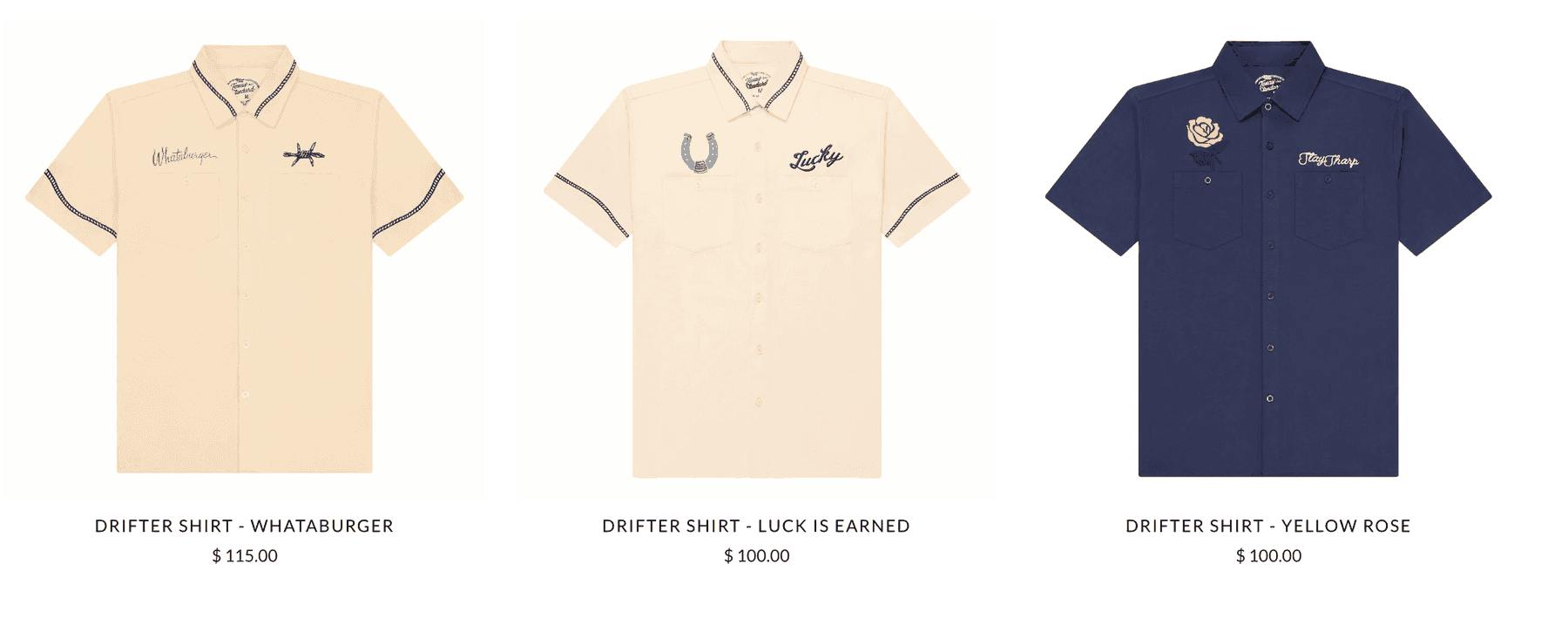
Quick Answer: Austin brands are adopting AI-composited photography because it cuts production costs by 50-60%, reduces timelines from 6-8 weeks to 3-4 weeks, and scales infinitely across SKUs and seasonal campaigns: all while maintaining the quality of traditional studio photography. The key: this isn't AI-generated imagery. It's real product photography enhanced with trained AI models that composite products into photorealistic scenes.
Austin has a content problem. Not a quality problem: the city has world-class photographers, stylists, and creative directors. The problem is math.
When you're a DTC brand growing 40% year-over-year, launching new SKUs every quarter, and running campaigns across Amazon, Shopify, Instagram, TikTok, and wholesale channels simultaneously, the traditional production model breaks. You need more images, in more contexts, faster than any studio can physically produce them. And the budget pressure at growth-stage companies means every dollar of production cost comes directly out of margin.
That's why Austin's sharpest brands are moving toward AI-composited photography. Not the AI-generated slop you've seen flooding Amazon listings: we're talking about real product photography combined with custom-trained AI models that place your actual products into photorealistic lifestyle scenes, seasonal environments, and campaign contexts at a fraction of the traditional cost.
This isn't a trend. It's a structural shift in how visual content gets produced, and Austin is leading it.
Austin's Brand Landscape: Why Visual Content Matters More Here
Austin isn't just a tech hub anymore. Over the last five years, the city has become one of the most concentrated DTC and CPG markets in the country. The brands here span every category that depends heavily on visual storytelling:
DTC and E-Commerce
Companies like Outdoor Voices, Kendra Scott, and dozens of venture-backed startups sell directly to consumers online. For these brands, product photography isn't marketing: it's the storefront. Every product page, every social ad, every email campaign lives or dies on the quality of the imagery.
Food and Beverage
Austin's food scene has spawned brands that now sit on shelves nationwide. From craft spirits to functional beverages to specialty snacks, these companies need packaging photography, lifestyle shots, recipe imagery, and seasonal campaign content year-round.
Outdoor and Active Lifestyle
The outdoor industry has a significant Austin presence. Brands selling gear, apparel, and accessories need aspirational lifestyle photography that connects products to the Texas landscape and the active culture the city is known for.
Fashion and Apparel
From boutique labels to fast-growing fashion brands, Austin's apparel companies compete visually with coastal brands that have traditionally had bigger production budgets.
Health, Wellness, and Beauty
Supplement brands, skincare lines, and wellness companies: Austin has a dense cluster of these, and they all need the same thing: high-volume product photography that looks premium across every sales channel.
What all of these categories share is a dependence on visual content that communicates lifestyle, not just product specs. Austin brands sell a feeling. They sell identity. And producing that kind of imagery at scale, across every channel, with the velocity that growth demands: that's where the traditional model starts to crack.
The Economics of Scale: Where Traditional Production Breaks
Here's the math that's forcing the conversation.
Traditional Production Model
A standard product photography project for 40 SKUs across 6 scene variations looks something like this:
- Pre-production: Creative direction, mood boards, shot lists, location scouting or set design: 1-2 weeks
- Production: 2-3 shoot days with photographer, stylist, props, lighting: $8,000-$15,000
- Post-production: Retouching, color correction, background compositing, format delivery: 2-3 weeks, $3,000-$8,000
- Total: $15,000-$28,000 and 6-8 weeks
That's for one campaign cycle. When you need seasonal refreshes (spring, summer, fall, holiday), new product launches every quarter, and platform-specific variations (square for Instagram, vertical for TikTok, wide for Amazon A+ content), you're looking at $60,000-$100,000+ annually in photography production alone.
For a brand doing $2M-$10M in revenue, that's a significant percentage of the marketing budget going to content production before a single ad dollar is spent.
AI-Composited Production Model
The same 40 SKUs, 6 scene variations, with AI-composited photography:
- Product capture: One controlled studio session to photograph every SKU on a clean background: 1 day, $2,000-$4,000
- AI model training: Custom LoRA models trained on your specific products to ensure accurate reproduction of materials, textures, colors, and details: 3-5 days, $1,500-$3,000
- Scene generation and compositing: AI-generated environments with your real products composited in, refined by human art directors: 1-2 weeks, $3,000-$5,000
- Total: $6,500-$12,000 and 3-4 weeks
That's a 50-60% cost reduction and a 40-50% timeline compression. But here's where it gets really interesting: the marginal cost of additional scenes drops dramatically. Want to add 4 more seasonal variations? With traditional photography, that's another full production cycle. With AI compositing, it's additional generation runs on models you've already trained: maybe $1,500-$3,000 more.
At Austin's startup growth rates, where brands are doubling revenue and adding SKUs faster than they can produce content for them, this math isn't a nice-to-have. It's a competitive advantage.
For a deeper breakdown of what AI photography costs at different scales, see our complete AI photography pricing guide for 2026.
What Austin Brands Are Getting Wrong Right Now
Before we talk about what the smart brands are doing, let's talk about the common mistakes we see from Austin companies trying to scale visual content on a budget.
Mistake 1: Generic Stock Photography
This is the most common shortcut, and it's the most damaging. Stock photography is designed to be generic: that's the entire business model. When your DTC brand uses the same lifestyle imagery available to every other brand in your category, you're actively undermining the differentiation you've spent years building.
Consumers recognize stock imagery, even subconsciously. A 2024 study by Salsify found that 76% of online shoppers said product imagery was "very important" in their purchase decision, and brands using original photography saw 35% higher engagement rates than those relying on stock.
Mistake 2: iPhone Photography as a Long-Term Strategy
iPhone cameras are genuinely impressive in 2026. For social media content, behind-the-scenes shots, and quick lifestyle captures, they're a legitimate tool. But as your primary e-commerce and campaign photography? No.
The gap shows in lighting consistency, color accuracy, depth of field control, and resolution for large-format applications. A lifestyle shot on your iPhone might look fine as a 1080x1080 Instagram post, but try using it for an Amazon A+ content module, a 24x36 trade show banner, or a Whole Foods shelf talker and the limitations become obvious.
Mistake 3: Over-Relying on UGC
User-generated content is powerful for social proof. But brand consistency and UGC are fundamentally at odds. When you build your visual identity around customer photos, you're outsourcing your brand's look and feel to people who aren't thinking about your brand guidelines.
The brands that win use UGC strategically: for reviews, testimonials, and community content: while maintaining a core library of professional imagery that defines the brand's visual standard.
Mistake 4: Treating Photography as a One-Time Investment
This might be the most expensive mistake. Brands invest in one big photoshoot, get a library of 50-100 images, and then try to make those images last for 18-24 months across every channel and campaign. By month six, the content feels stale. By month twelve, it's being recycled in ways that dilute its impact.
Visual content has a shelf life, especially in fast-moving categories. The brands that understand this build ongoing production into their marketing budgets rather than treating it as a periodic expense.
What the Early Adopters Are Doing: The Hybrid Play
The smartest Austin brands aren't choosing between traditional photography and AI photography. They're building a hybrid production model that uses each approach where it performs best.
Traditional Photography For:
- Hero brand moments: Campaign launches, brand refreshes, and cornerstone content that defines the brand's visual identity. These deserve the full production treatment: creative direction, styled sets, professional lighting, and meticulous post-production.
- People and lifestyle with models: AI can do remarkable things with products, but lifestyle photography featuring real people still benefits from traditional production. The nuance of human expression, movement, and interaction in a styled environment is something traditional photography handles better.
- Tactile and sensory products: Some products sell on texture, materiality, and the feeling of holding them. Traditional macro photography and close-up detail shots can capture these qualities in ways that connect viscerally with buyers.
AI-Composited Photography For:
- E-commerce product pages: Hero images, alternate angles, and lifestyle context shots across your entire catalog. AI compositing handles this at scale without the per-SKU cost escalation of traditional shoots.
- Social media testing: Need 10 variations of an ad creative to A/B test across audiences? AI compositing generates variations in hours, not weeks. Test which environments, color palettes, and compositions perform best, then invest traditional production budget in the winners.
- Seasonal and campaign refreshes: Holiday themes, spring collections, back-to-school: instead of reshooting products in new environments every quarter, generate new scenes from your trained AI models. Same products, unlimited contexts.
- New product launches: Get to market with professional imagery before you've even received final production samples. Ship a prototype, capture it once, and generate a full suite of launch imagery while the final product is still in manufacturing.
- Platform-specific formats: Generate square, vertical, wide, and custom aspect ratios for every platform without cropping or reshooting. Each format gets composed specifically for its intended context.
For a complete walkthrough of how AI product photography works from capture to final delivery, read our guide to AI product photography for e-commerce.
The Result
Early adopters are producing 3-5x more visual content at 40-60% lower total cost, with faster time-to-market on new products and campaigns. They're not sacrificing quality: they're reallocating budget from repetitive production work to high-impact creative moments.
Why Austin Specifically: The Perfect Market for AI Photography
Austin isn't just adopting AI photography: it's arguably the best market in the country for this shift. Here's why.
The Creative Ecosystem
Austin has a dense network of photographers, art directors, stylists, retouchers, and creative agencies. This matters because AI-composited photography isn't a replacement for creative talent: it's a tool that creative professionals use to work faster and at greater scale. The cities where AI photography will struggle are the ones without creative infrastructure. Austin has that infrastructure in abundance.
When an AI creative agency in Austin produces AI-composited imagery, it's not a tech company playing at photography. It's photographers and art directors who understand lighting, composition, and brand storytelling using AI as a production multiplier.
The Startup Culture
Austin brands move fast. They test, iterate, and pivot in ways that traditional markets (New York, LA) often resist. That cultural bias toward speed and experimentation aligns perfectly with AI photography's strengths: rapid iteration, affordable testing, and the ability to produce and discard creative variations without the sunk cost psychology of expensive traditional shoots.
When a $5M Austin DTC brand says "let's test 8 different lifestyle contexts for our hero product this quarter," the AI production model makes that feasible. In a traditional model, you'd pick 2-3 and hope you chose right.
The DTC Growth Wave
Austin's DTC ecosystem is growing faster than most markets' ability to service it. Photographers are booked months out. Studio space is limited. And brands are launching products faster than they can schedule shoots. AI compositing alleviates the bottleneck not by replacing photographers, but by multiplying their output.
One studio session captures 50 products. AI models trained on those products then generate hundreds of scene variations over weeks and months, without requiring additional studio time. The photographer's work compounds rather than being consumed in a single deliverable.
The Cost Sensitivity
Austin brands are well-funded but margin-conscious. They're not bootstrapping on credit cards, but they're also not spending like established CPG brands with $500K annual photography budgets. The 50-60% cost reduction of AI compositing hits a sweet spot for Austin's growth-stage companies: premium quality at a price point that doesn't require board approval.
How It Actually Works: The AI Photography Process
If you're considering AI-composited photography for your Austin brand, here's what the process actually looks like. No buzzwords, no hand-waving: just the steps from product to final deliverable.
Step 1: Product Capture
Your products come to the studio for a controlled photography session. Every SKU is photographed on a clean background with consistent, calibrated lighting. This session captures the ground truth of your products: accurate colors, materials, textures, reflections, and dimensional proportions.
This is real photography with professional equipment. No corners are cut here because everything downstream depends on the accuracy of these captures.
Step 2: LoRA Model Training
Custom AI models (called LoRA models) are trained specifically on your products. These models learn the unique visual characteristics of each product: how light interacts with the material, how colors render in different environments, how the product looks from different angles.
This is what separates professional AI compositing from consumer AI tools. A generic AI model doesn't know what your product looks like. A custom-trained LoRA model knows exactly what your product looks like and can reproduce it with accuracy that passes quality control.
Step 3: Scene Generation and Compositing
Art directors create scene prompts and compositions that align with your brand guidelines and campaign objectives. The trained AI models generate your products within these scenes, producing photorealistic lifestyle imagery, environmental contexts, and campaign compositions.
Step 4: Human Review and Refinement
Every generated image goes through human art direction review. Color accuracy is verified against the original product captures. Lighting consistency is checked. Composition is refined. Final retouching is applied. The AI handles the heavy lifting of scene generation, but human creative judgment makes the final call on what ships.
For a more detailed technical breakdown, see our article on how AI photography works.
The Free Test Set Offer
We know this is a big shift in how brands think about photography production. That's why we offer something unusual: ship us one SKU, and we'll produce a free test image set.
No contract. No commitment. No "free consultation" that's actually a sales pitch.
Here's what you get:
- Product capture of your SKU in our controlled studio environment
- Custom LoRA model training on your specific product
- 3-5 finished images in different scene contexts and compositions
- Full-resolution deliverables you can actually use
The point is simple: see the quality before you spend a dollar. Compare the AI-composited images against your current product photography. Show them to your team. Put them in front of customers. If the quality speaks for itself: and it does: we'll talk about scaling to your full catalog.
[Request your free test set here](/ai-studio) and see what AI-composited photography actually looks like for your products.
Frequently Asked Questions
Can you tell the difference between AI-composited and traditionally shot photos?
In a properly executed AI compositing workflow, no. The product itself is real photography: captured in a professional studio with calibrated lighting and color-accurate equipment. The AI generates the environment and context around the product. When the LoRA model is well-trained and the compositing is refined by experienced art directors, the final images are indistinguishable from traditional lifestyle photography. That said, quality varies enormously between providers. Cheap AI services using generic models produce obvious artifacts. Custom-trained models with human art direction produce images that pass the most critical evaluation.
Does AI photography work for all product categories?
It works exceptionally well for rigid products (bottles, packaging, electronics, accessories, home goods) and increasingly well for soft goods (apparel, textiles, bags). Categories where it performs best are those with consistent, well-defined physical forms. Categories that present more challenges include highly reflective or transparent objects (glass, chrome, clear liquids) and products where tactile texture is a primary selling point. Even for challenging categories, AI compositing typically handles 70-80% of the visual content needs, with traditional photography filling the gaps for hero shots and close-up details.
How long does the entire process take from start to finished images?
For a typical catalog of 20-40 SKUs: product capture takes 1 day, LoRA model training takes 3-5 business days, and scene generation with art direction review takes 1-2 weeks. Total timeline is 3-4 weeks from shipping products to receiving final deliverables. Compare that to 6-8 weeks for a traditional multi-day production shoot with equivalent output. Ongoing additions (new SKUs, new seasonal scenes) are faster because the trained models already exist: typically 1-2 weeks for new content drops.
What do I need to provide to get started?
Just your products. Ship your SKUs to our Austin studio and we handle everything from there: photography, model training, scene direction, compositing, and final delivery. If you have brand guidelines, mood boards, or reference imagery for the look and feel you're targeting, sharing those helps us align the creative direction. But they're not required. We'll develop scene concepts based on your brand positioning and target market if you don't have specific direction in mind.
Is AI-composited photography cheaper for small catalogs too, or only at scale?
The economics favor AI compositing at almost every scale, but the advantage grows with catalog size. For a small catalog (5-10 SKUs), traditional photography might cost $3,000-$6,000 while AI compositing runs $2,500-$5,000: a meaningful but not dramatic difference. For medium catalogs (20-50 SKUs), the gap widens significantly: $12,000-$25,000 traditional versus $6,000-$12,000 AI. For large catalogs (100+ SKUs), AI compositing becomes the only economically viable approach for maintaining high-quality imagery across every product. The real savings compound over time as you add products and seasonal variations using already-trained models. Check our pricing guide for detailed breakdowns at every scale.
Will AI photography replace traditional photography entirely?
No, and it shouldn't. The best production model for most brands is hybrid: AI compositing for volume, variety, and velocity, with traditional photography for hero brand moments, people-focused lifestyle content, and sensory detail shots. Think of AI compositing as expanding your production capacity, not replacing your creative vision. The brands getting the best results use traditional photography to establish their visual identity and AI compositing to scale it efficiently across every product and channel.
The Bottom Line
Austin brands are choosing AI photography in 2026 because the math demands it. Growing fast, launching products frequently, selling across multiple channels, and competing visually with bigger brands on tighter budgets: that's the reality for most Austin DTC and CPG companies. AI-composited photography doesn't solve this by cutting corners. It solves it by fundamentally changing the production economics: capture once, generate infinitely.
The brands that figure this out first get more content, faster, at lower cost: and they redirect the savings into the creative strategy, media spend, and brand-building that actually drives growth.
If you're an Austin brand producing visual content at scale and the traditional model feels like it's holding you back, [explore what AI Studio can do for your catalog](/ai-studio).