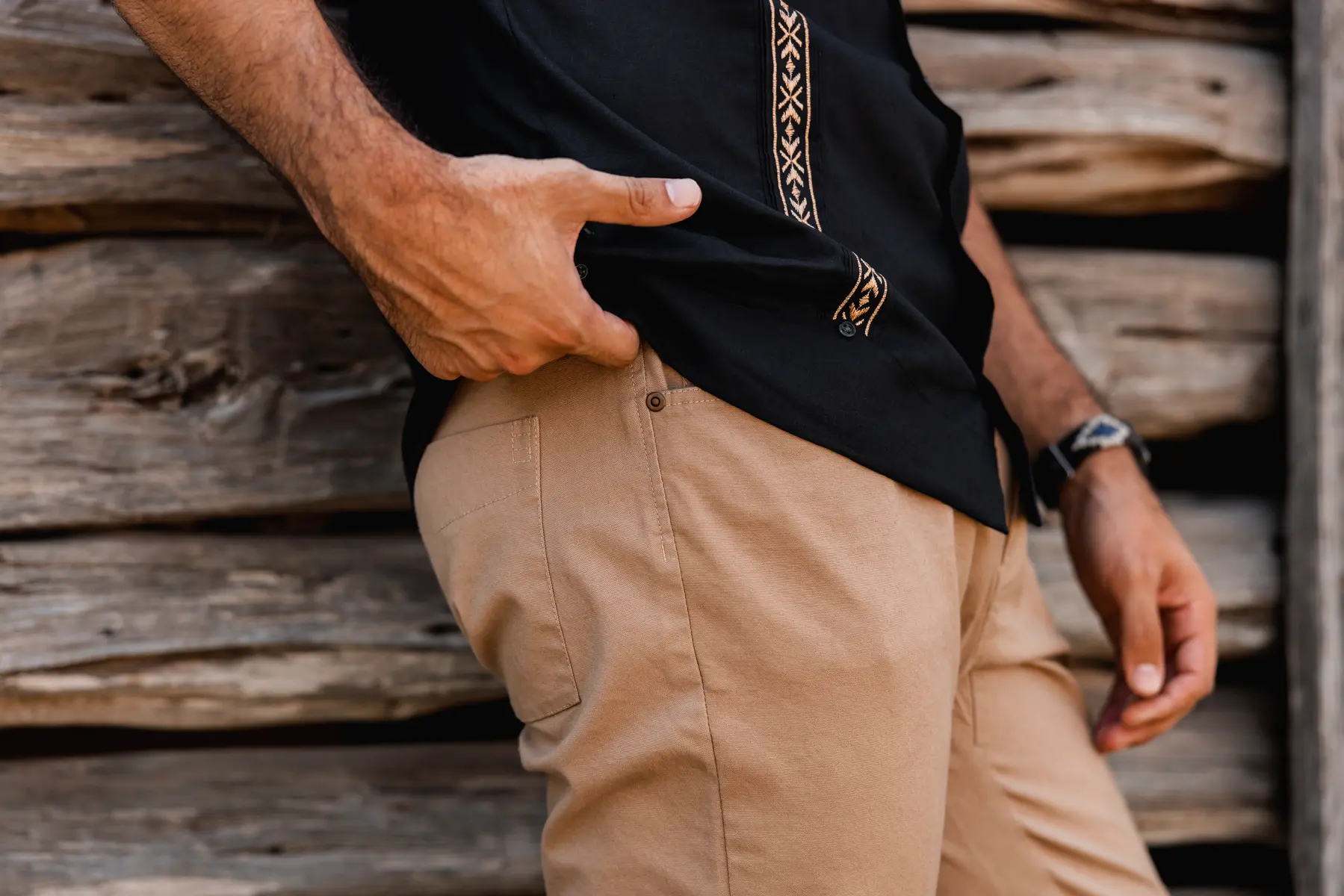
Quick Answer: Great clothing product photography comes down to three things: creating shape in a shapeless garment, lighting fabric so texture reads on screen, and shooting enough angles to replace the fitting room experience. Brands that invest in professional apparel photography see return rates drop 20-30% and conversion rates climb 2-3x compared to flat-lay phone shots.
A hoodie is not a bottle of hot sauce.
That sounds obvious, but I watch brands make this mistake constantly. They hire a product photographer whose portfolio is full of hard goods: supplements, electronics, packaged food: and expect the same approach to work on a French terry hoodie. Then they get back images where the hoodie looks like a deflated balloon on a white background, and they wonder why nobody's adding to cart.
Clothing is the hardest category in product photography. I've shot thousands of SKUs across CPG, beauty, food, and fashion, and nothing punishes lazy technique like a garment. Fabric moves. It wrinkles. It absorbs light differently depending on the weave. A black cotton tee and a black silk blouse require completely different lighting setups, even though your customer just sees "black top" on their screen.
The apparel e-commerce market hit $672 billion globally in 2023 (Statista) and is projected to cross $820 billion by 2027. Competition is brutal. Your product images are doing the job that a retail sales floor used to do: and most brands are losing that fight.
Here's how to win it.
Why Clothing Product Photography Is Different From Everything Else
Every product category has its challenges. Beverages need condensation and pour shots. Supplements need label clarity. Food needs to look alive.
Clothing needs to look like a body is inside it.
That's the fundamental problem. You're photographing something designed to be worn, but you're shooting it without a person in it (at least for your primary PDP images). The garment has no structure on its own. It's just fabric. Your job is to create the illusion of form: to make the viewer's brain fill in the body.
This is why flat-lay photography, while fast and cheap, consistently underperforms styled ghost mannequin or on-model imagery. Shopify's internal data shows that apparel listings with ghost mannequin images convert 24% higher than flat-lay-only listings (Shopify Plus, 2024). The human brain wants to see shape. Give it shape.
The Return Rate Problem
Here's the stat that should keep every apparel brand founder up at night: online clothing purchases have an average return rate between 30-40% (National Retail Federation, 2024). That's not a photography problem alone: fit, fabric expectations, and color accuracy all play a role. But photography is the first line of defense.
When I photograph clothing for DTC brands, I'm not just making pretty pictures. I'm trying to reduce returns. Every image should answer an unspoken question: What does this actually look like? How does it drape? Is that fabric stiff or soft? Will it bunch up at the waist?
If your photography can't answer those questions, your customer service inbox will.
The Three Approaches to Apparel Photography
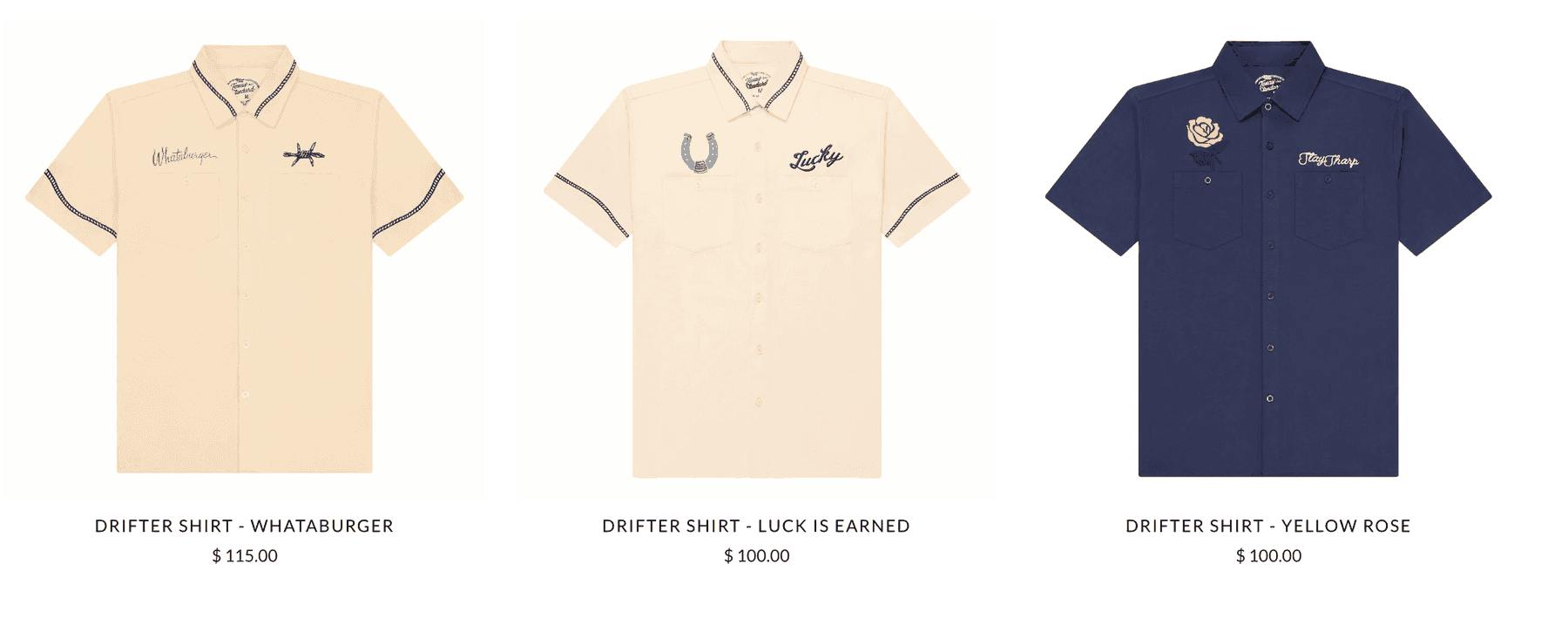
Flat Lay
The garment is laid on a surface and shot from directly above. It's fast: an experienced team can knock out 40-60 SKUs per day. It's also the weakest approach for conversion because it strips out all dimension. The garment looks like a paper cutout.
That said, flat lay has its place. It works well for accessories, folded items, and curated "outfit grid" lifestyle shots. I use it as a secondary image type, never as the hero.
When to use it: Supplementary images, social content, accessories, items that are genuinely flat (scarves, bandanas).
Ghost Mannequin (Invisible Mannequin)
This is the workhorse of professional apparel e-commerce photography. You shoot the garment on a mannequin, then composite out the mannequin in post-production so the clothing appears to float with three-dimensional shape. It's what you see on every major retailer from Nordstrom to ASOS.
Ghost mannequin work requires two shots minimum per garment: front on the mannequin, then the interior/back of the neckline or waistband shot separately for compositing. Complex pieces like jackets might need four or five component shots.
When to use it: Primary PDP images for any garment where shape matters (which is most of them).
On-Model
A real human wearing the garment. This is the gold standard for conversion but also the most expensive and logistically complex. You need the model, hair, makeup, a bigger studio or location, and significantly more time per SKU.
Amazon's A+ Content guidelines now explicitly recommend on-model imagery for apparel (Amazon Seller Central, 2025), and brands using on-model images report 35% higher conversion rates compared to ghost mannequin alone (BigCommerce, 2024).
When to use it: Hero images, campaign assets, lifestyle galleries, any brand that's selling aspiration alongside the product.
Most serious apparel brands use a combination of all three. Ghost mannequin for the primary PDP shot, on-model for the secondary lifestyle angle, and flat lay for the detail/texture close-up.
Lighting Fabric: The Technical Heart of Clothing Photography
This is where most photographers get it wrong, and it's where experienced apparel photographers earn their rate.
Why Fabric Is Hard to Light
Different textiles reflect light in fundamentally different ways. A matte cotton absorbs light and shows texture through shadow. A satin or silk reflects light in specular highlights that can blow out detail. Denim has a complex surface that needs mid-range contrast to show the weave. Sheer fabrics need backlighting or they disappear entirely.
If you light every garment the same way, half your catalog will look wrong.
The Two-Light Foundation
My base setup for most apparel work is deceptively simple:
Key light: A large softbox (I use a 4x6-foot) positioned 45 degrees to the side and slightly above. Size matters here: the larger the source relative to the subject, the softer the wraparound. Soft light is forgiving on fabric wrinkles and creates gentle gradients that show dimension.
Fill: A second, lower-powered softbox or a large white V-flat on the opposite side. The fill ratio depends entirely on the fabric. For dark fabrics, I bring the fill closer to a 1:1 ratio to open up shadow detail. For white or light fabrics, I pull the fill back to maybe 1:3 so there's enough contrast to show texture.
Fabric-Specific Adjustments
Cotton/jersey: Straightforward. The two-light setup works as-is. Focus on getting enough shadow to show the fabric's weight and drape.
Silk/satin: Drop the key light's power and feather it: angle the softbox so only the edge of the light hits the garment. Direct soft light on satin still creates harsh specular streaks. You want the light to kiss it, not blast it.
Leather/faux leather: Add a strip light or a hard edge light from behind to pick up surface texture and any grain pattern. Leather without edge definition looks like plastic in photos.
Sheer/mesh: Position a backlight behind the garment (a gridded strip box works well) to show the transparency of the fabric. Without backlighting, sheer fabric photographs as opaque and the customer gets a nasty surprise when the package arrives.
Denim: Increase contrast slightly. Denim's texture is its selling point, and it needs directional light to show the weave pattern. I'll often use a slightly smaller key light source: a 3x4 instead of the 4x6: to get a bit more bite.
Knits/sweaters: Skim lighting. Position the key light almost parallel to the garment surface so the light rakes across the knit texture. This turns a flat-looking sweater into something you can almost feel through the screen.
Styling: The Invisible Skill That Makes or Breaks the Shot
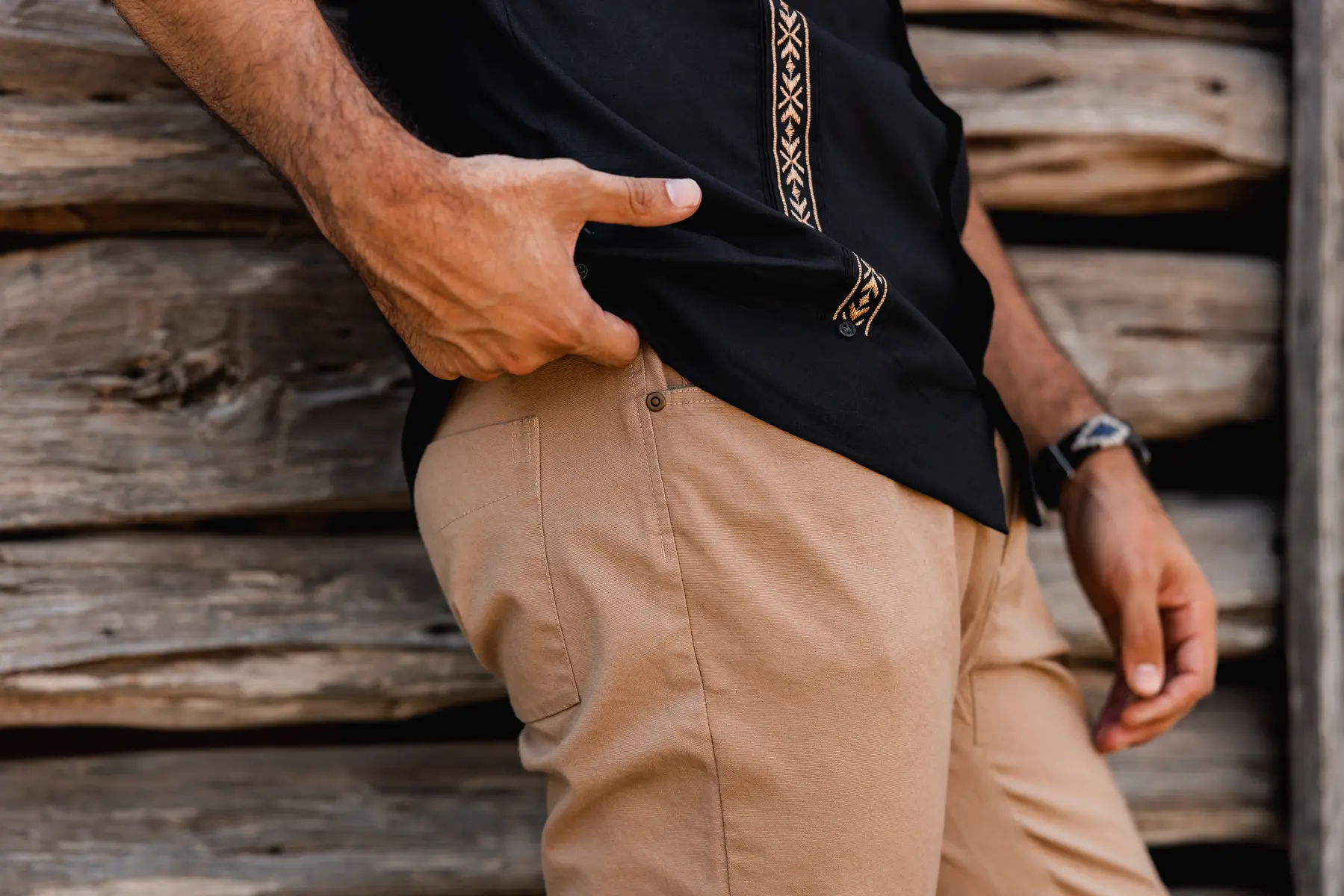
You can nail the lighting and still end up with terrible clothing photos if the styling is off. Styling in apparel photography isn't about fashion: it's about engineering.
Steaming Is Non-Negotiable
Every single garment gets steamed before it goes on set. Every one. I don't care if it just came off a hanger and "looks fine." Cameras see wrinkles that your eyes forgive. A handheld steamer is the single most important tool in clothing product photography after the camera itself.
Budget 3-5 minutes of steaming per garment. For linen or cotton, budget more. For a 50-SKU shoot day, that's over two hours of just steaming. Plan for it.
Pinning and Clipping
On ghost mannequin shoots, the garment rarely fits the mannequin perfectly. You'll use binder clips, pins, and fashion tape on the back to pull the fabric taut and create the right silhouette. This is invisible in the final image but absolutely critical.
The goal is to show the garment at its best: the way it would look on someone who's the perfect size for it. Not stretched, not baggy. Just right.
A good wardrobe stylist can pin a garment in 2-3 minutes. A photographer trying to do it themselves takes 10. On a high-volume shoot, that time difference is the difference between finishing the day or not.
Color Accuracy and White Balance
Apparel has the highest color-sensitivity of any product category. A customer orders a "dusty rose" top and receives something that looks salmon: that's a return. And a bad review.
I shoot a color checker card (X-Rite ColorChecker is the industry standard) at the beginning of every lighting setup and whenever the setup changes. In post-production, this gives us an objective reference point to calibrate colors.
Even then, monitor calibration matters. I proof apparel images on a calibrated monitor and then spot-check on an iPhone, because that's where most customers will see them. If the color reads differently on mobile, we adjust. The image needs to be accurate on the device your customer is actually using.
Post-Production: Where Good Photos Become Great Listings
Ghost Mannequin Compositing
The composite process for ghost mannequin work takes 10-20 minutes per image for a skilled retoucher. Multiply that across a 200-SKU catalog and you're looking at 33-66 hours of post-production. This is why apparel photography costs more than most brands expect.
The composite needs to be invisible. If a customer can tell the mannequin was removed: weird neck shadows, floating collars, misaligned seams: it undermines trust. I've seen brands try to outsource this to $2-per-image overseas retouching services and the results are consistently bad. You get what you pay for.
Background Removal and Consistency
Most marketplaces and retailers require pure white backgrounds (RGB 255, 255, 255). Amazon's requirements are explicit about this. But "white" in-camera and "pure white" in the final deliverable are different things. We light for near-white and clean it in post, which gives us more control over edge detail than trying to blow out the background on set.
Consistency across a catalog matters more than any individual image. If your small tops are shot at one scale and your large jackets at another, the collection page looks chaotic. We standardize frame positioning by garment type so that when a customer is browsing, every thumbnail feels like it belongs to the same brand.
Retouching Without Lying
There's a line between making a garment look its best and misrepresenting it. I remove dust, lint, stray threads, and mannequin artifacts. I even out lighting inconsistencies. I do NOT alter the fabric's texture, reshape the garment's silhouette beyond what pinning already achieved, or change colors to something more "appealing."
The goal is accuracy at its most flattering. Cross that line and your return rate will tell you.
How to Photograph Clothing: A Practical Shoot-Day Workflow
For brands planning their first professional apparel shoot, here's what a real production day looks like:
Pre-Production (1-2 Weeks Before)
1. Sort SKUs by fabric type and color. Group similar fabrics together so you're not constantly changing lighting setups. 2. Steam everything in advance. Do a pre-steam the day before. Garments will need a touch-up on set, but starting with pressed items saves massive time. 3. Select mannequin sizes. If your line spans XS-3XL, you'll need multiple mannequin forms. Most studios shoot the size M or L as the representative sample. 4. Create a shot list. Every SKU, every angle, mapped out. Front, back, detail close-up, on-model if applicable. No improvising on shoot day.
Shoot Day
- 8:00 AM: Set up lighting, shoot color checker, test first garment
- 8:30 AM - 12:00 PM: Ghost mannequin shooting, targeting 8-12 SKUs per hour with a two-person team (photographer + stylist)
- 12:00 - 1:00 PM: Break. Seriously. Fatigued photographers make bad decisions about wrinkles.
- 1:00 - 5:00 PM: Continue SKU shooting or switch to on-model if scheduled
- 5:00 - 5:30 PM: Review selects, flag any garments that need reshoot
A well-run shoot produces 40-60 finished ghost mannequin SKUs per day or 15-25 on-model looks per day. Those numbers assume an experienced team. First-time shoots run at about half that pace.
What Clothing Product Photography Costs in 2026
Pricing varies wildly, but here are realistic ranges for professional work:
- Flat lay only: $25-50 per image
- Ghost mannequin (composited): $50-100 per image
- On-model (studio): $150-400 per look (includes model fees)
- On-model (location): $300-800 per look
- Full catalog package (50+ SKUs, mixed approach): $3,000-8,000
These are rates for experienced commercial photographers producing marketplace-ready deliverables. You can find cheaper. The question is whether cheaper images will cost you more in returns and lost conversions than they save upfront.
For brands with growing catalogs, the math almost always favors investing in quality imagery for your top 20% of SKUs (the ones driving revenue) and using a more efficient approach for long-tail items.
Common Mistakes I See Brands Make
Using the same mannequin for everything. A dress form and a torso form are different tools for different garments. Putting a pair of joggers on a dress form looks ridiculous.
Skipping the back shot. Customers want to see the back. Period. Brands that include back views see 15% fewer "what does the back look like?" customer service inquiries (Shopify Merchant Survey, 2024).
Over-retouching fabric texture. Smoothing out denim's grain or softening a knit's texture makes the image look fake, even if the customer can't articulate why. Preserve texture.
Inconsistent model diversity. If you're shooting on-model, represent your customer base. This isn't just ethics: it's conversion strategy. Customers buy more when they see someone who looks like them wearing the product (McKinsey State of Fashion, 2024).
Shooting in direct sunlight. Natural light is beautiful for lifestyle content, but direct sun creates harsh shadows that hide fabric detail. Overcast or open shade produces far better apparel images. If you're shooting outside, the golden hour window is your friend: but so is a large scrim diffusing midday light.
When to Hire a Professional vs. DIY
If you have fewer than 20 SKUs and a tight budget, you can produce decent flat-lay images yourself with a lightbox, a good phone camera, and careful steaming. There are limits, but it's a viable starting point.
Once you're past 20 SKUs, or once your brand is competing for attention on marketplaces where the top listings all have ghost mannequin and on-model imagery, DIY becomes a liability. The time cost alone: shooting, retouching, reshooting the ones that didn't work: usually exceeds what a professional charges.
If your average order value is above $75 and your return rate is above 25%, better photography will almost certainly pay for itself within one product cycle.
We work with apparel brands ranging from local Austin startups to national DTC labels. Whether it's a 30-SKU capsule collection or a 500-piece seasonal catalog, the approach scales. If you're planning a clothing shoot and want to talk through the logistics, get in touch. You can also see examples of our fashion and apparel work in our portfolio.
The Bottom Line
Clothing product photography is a technical discipline disguised as a creative one. The brands that treat it seriously: investing in proper lighting, styling, and post-production: sell more and return less. The ones that cut corners end up spending the savings on customer service and replacement shipments.
Your product images are your storefront. In apparel, they're also your fitting room, your sales associate, and your first impression. Make them count.