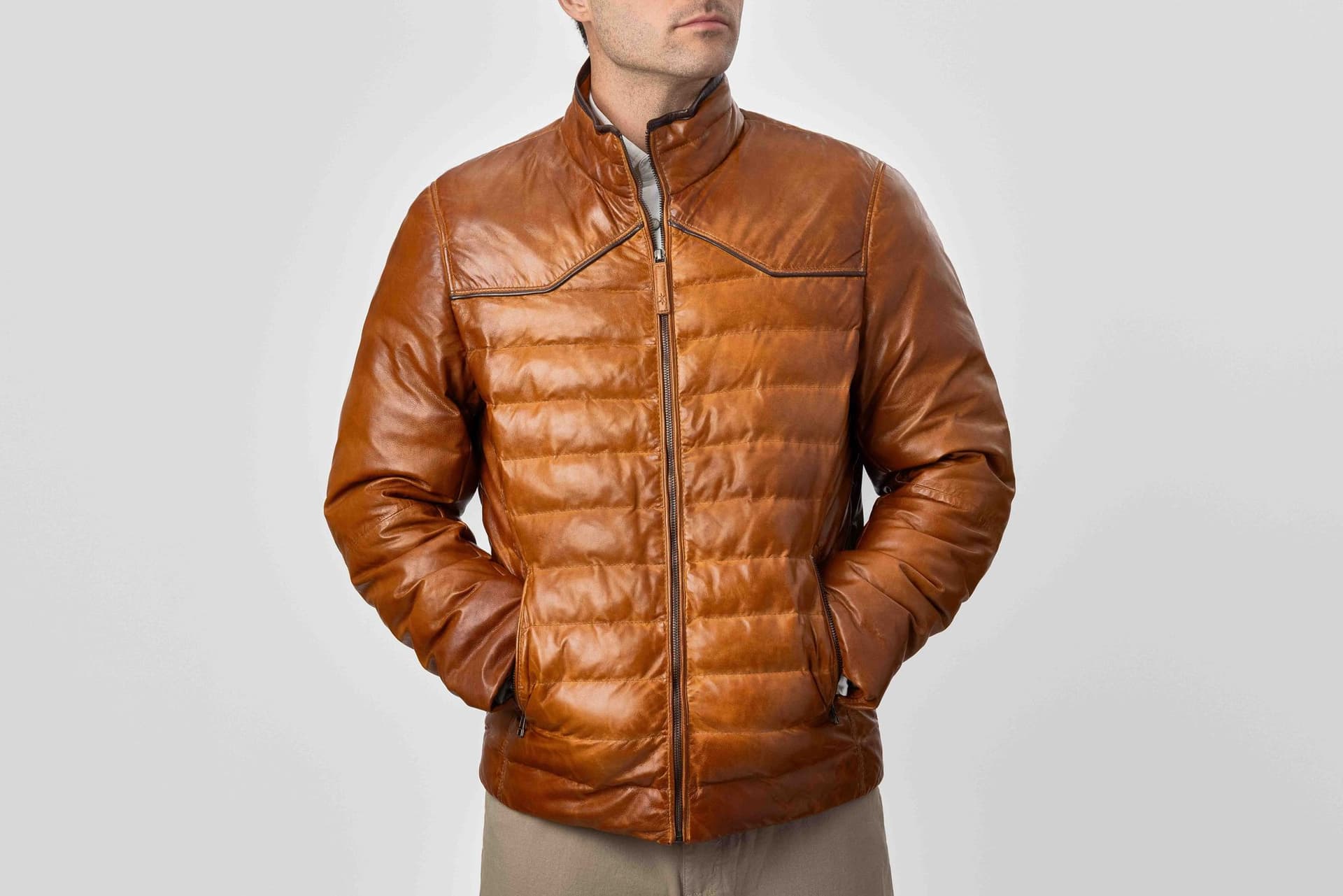
Quick Answer: For DTC brands producing 100+ product images per year, AI-composited photography cuts per-image costs from $250--$400 to $50--$150, compresses production timelines from 5--10 weeks to 8--14 days, and delivers 12-month ROI north of 3,000% when you account for direct savings, faster launches, and conversion rate improvements.
Your product photography budget is bleeding money. Not because you are overspending on a single shoot: but because every SKU launch, every seasonal refresh, every new marketplace listing triggers the same expensive cycle: book a studio, hire a photographer, style the set, shoot for a day, wait two weeks for retouching, repeat.
For a DTC brand with 200 SKUs and quarterly content needs, that cycle can consume $150,000+ per year. And the math only gets worse as you scale.
AI-composited product photography changes the equation entirely. Not by replacing real photography: your products still need to be shot: but by eliminating the most expensive and time-consuming parts of the process. We have run the numbers across dozens of e-commerce projects, and the ROI case is not subtle. It is overwhelming.
Here is exactly how it breaks down.
The Real Cost of Traditional Product Photography
Let's start with what brands actually pay. Based on 2025/2026 commercial photography rates across major markets, here is what a typical e-commerce product shoot costs per image:
- Photographer day rate: $1,500--$3,000
- Studio rental: $500--$1,200/day
- Styling and props: $200--$500/day
- Post-production/retouching: $25--$75/image
- Art direction: $500--$1,000/day
When you divide the total day cost by usable final images (typically 8--15 per day for styled product shots), you land at $250--$400 per finished image. That is the industry reality, not an outlier.
For a brand with 200 SKUs needing 3 images each (hero, lifestyle, detail), that is 600 images. At $322 per image (the midpoint), you are looking at $193,200 per year just for one full catalog refresh.
Most brands cannot afford that, so they compromise. They reuse stale imagery. They skip lifestyle shots. They launch new products with iPhone photos on white backgrounds and wonder why conversion rates are flat.
What AI-Composited Photography Actually Costs
AI product photography: at least the way we approach it at 51st & Eighth: is not about generating fake products. Your real product gets shot in a controlled studio environment. Clean, high-resolution captures on a simple background. That part still requires a photographer and a camera.
The difference is everything that happens after.
Instead of building elaborate sets, renting locations, or scheduling multi-day lifestyle shoots, your product is composited into photorealistic environments using AI. A candle on a marble bathroom counter at golden hour. A protein powder on a gym bench with morning light streaming through windows. A skincare bottle nestled in river rocks with mist: scenes that would cost thousands to produce traditionally, generated for a fraction.
The per-image cost breakdown for AI-composited photography:
- Studio capture (batch): $15--$30/SKU (shooting 30--50 products per day)
- AI compositing + retouching: $35--$120/image
- Total per finished image: $50--$150
At the midpoint of $100 per image, those same 600 images cost $60,000: a savings of $133,200 compared to traditional methods.
But cost per image is only part of the story.
The Time Factor: Speed to Market
Traditional product photography timelines for a 200-SKU catalog:
| Phase | Traditional | AI-Composited | |. |. |. | | Pre-production planning | 1--2 weeks | 2--3 days | | Shoot days | 5--8 days | 2--3 days | | Post-production | 2--4 weeks | 3--5 days | | Revisions | 1--2 weeks | 1--2 days | | Total | 5--10 weeks | 8--14 days |
For seasonal brands, that difference is not a luxury: it is a competitive requirement. If your spring collection takes 10 weeks to photograph and your competitor's takes 2, they are live on Shopify and Amazon while you are still approving retouching proofs.
The revenue impact of launching even two weeks earlier can dwarf the photography savings themselves. A DTC brand doing $2M annually generates roughly $38,000 per week. Two extra weeks of live product listings means up to $76,000 in potential revenue that would otherwise be left on the table.
The 12-Month ROI Formula
Here is a straightforward framework for calculating your return on switching to AI-composited photography. No hand-waving: just inputs and outputs.
Inputs: - Current annual photography spend (A) - Projected AI photography spend (B) - Revenue gained from faster launches (C): estimate conservatively - Revenue gained from better imagery (D): even a 5% conversion lift on product pages is significant - Cost of transition (E): new workflows, team training, first test batch
The Formula:
12-Month ROI = ((A - B) + C + D - E) / E x 100
Example: A DTC Brand With 200 SKUs
Let's walk through a realistic scenario.
The brand: A DTC skincare company with 200 SKUs, selling on Shopify and Amazon. They refresh imagery quarterly for seasonal campaigns and launch 30 new products per year.
Annual photography needs: - Full catalog refresh: 200 SKUs x 3 images = 600 images - Seasonal campaigns (4x): 50 hero images per season = 200 images - New product launches: 30 SKUs x 4 images = 120 images - Total: 920 images/year
Traditional cost: 920 images x $322/image = $296,240/year
AI-composited cost: 920 images x $100/image = $92,000/year
Direct savings (A - B): $204,240
Speed-to-market revenue (C): - 4 seasonal launches, each 3 weeks faster = 12 extra selling weeks - Conservative estimate: $15,000 in incremental revenue from earlier launches - C = $15,000
Conversion lift revenue (D): - Better lifestyle imagery increases product page conversion by 8% (conservative for going from white-background to styled scenes) - On $2M annual revenue: 8% x $2,000,000 = $160,000 - Discount by 50% for attribution uncertainty - D = $80,000
Transition costs (E): - First test batch (50 images): $5,000 - Workflow integration: $2,000 - Team training/review time: $1,000 - E = $8,000
The Result
ROI = ($204,240 + $15,000 + $80,000 - $8,000) / $8,000 x 100 = 3,640%
Even if you cut the conversion lift estimate in half again and ignore the speed-to-market gains entirely, the ROI from direct cost savings alone is over 2,400%.
The Scalability Advantage
Here is where AI photography becomes not just cheaper, but structurally different from traditional methods.
With traditional photography, costs scale linearly. Double your SKUs, double your budget. Triple your marketplace presence (Amazon, Shopify, TikTok Shop, Faire), triple your image needs.
With AI compositing, the marginal cost of additional scenes drops dramatically after the initial studio capture. Once your product is cleanly shot, generating a second environment costs 60--70% less than the first. A third environment, even less.
| Need | Traditional | AI-Composited | |. |. |. | | 1 scene per SKU (200 images) | $64,400 | $20,000 | | 3 scenes per SKU (600 images) | $193,200 | $42,000 | | 5 scenes per SKU (1,000 images) | $322,000 | $58,000 |
At 5 scenes per SKU, the traditional approach costs 5.5x more. That gap only widens as you add SKUs, marketplaces, or seasonal refreshes.
For brands planning to scale from 200 to 500 SKUs over the next two years: a common trajectory in DTC: AI photography is not just a cost optimization. It is the only model that makes full visual coverage financially viable.
What AI Photography Cannot Replace (Yet)
Honesty matters more than a sales pitch, so here is where traditional photography still wins:
- Hero brand campaigns where every pixel is scrutinized by a creative director
- Model photography: real people wearing or using products still require real shoots
- Tactile detail shots where you need macro-level texture accuracy (luxury leather, fine jewelry)
- Video content: AI compositing is a still-image solution today
The smartest brands use a hybrid approach: traditional shoots for hero content and campaigns, AI compositing for the high-volume catalog and marketplace imagery that makes up 70--80% of their total needs. That is where the ROI math is most compelling.
How to Start Without Risk
You do not need to overhaul your entire photography workflow overnight. The most successful transitions we have seen follow this path:
- Test batch: Pick 20--30 SKUs and run them through AI compositing alongside your traditional pipeline. Compare quality, speed, and cost side by side.
- A/B test the results: Run the AI images on a subset of product pages and measure conversion rates against your existing photography. Let the data decide.
- Scale what works: Once you have validated quality and conversion performance, shift your high-volume catalog work to AI compositing and reserve traditional shoots for hero campaigns.
The test batch typically costs $2,000--$4,000 and takes about a week. That is a low-risk way to validate a six-figure annual savings.
The Bottom Line
For DTC and e-commerce brands producing more than 100 product images per year, AI-composited photography is not a nice-to-have efficiency gain. It is a structural cost advantage that compounds every quarter.
The brands adopting this now are not just saving money: they are launching faster, testing more visual concepts, and building richer product pages while their competitors are still waiting on retouching proofs.
The ROI is not theoretical. It is arithmetic.
See what AI-composited photography looks like for your products: [Explore AI Studio](/ai-studio)